A little joy

Lately I’ve been practicing a  meditation called metta, or lovingkindness, which is supposed to cultivate compassion for yourself and others. The classical formulation has four parts (with some variation): menorah

May I/we be safe.
May I/we be happy.
May I/we be free from suffering.
May I/we be at peace.

I adapt these to my needs:

May I feel safe.
May I feel loved.
May I feel softness.
May I feel joy.
May I feel at peace.

Continue reading

‘Tell me about your despair’

Tell me about your despair, yours, and I will tell you mine.
Meanwhile, the world goes on.

512px-Rome_WWStory_angel_in_grief
Photo by Raja Patnaik, post-processed and uploaded by Alessio Damato, via Wikimedia Commons

I didn’t blog at all for five weeks in September and October. The despair was too thick.

I knew it would happen. Drawing inspiration from the stunning first lines of Mary Oliver’s poem “Wild Geese”—the verses at the top of every page of this blog—I am trying to let myself love what I love, to accept myself as I am. But all along, I knew I would eventually arrive at the next, pivotal lines:

Tell me about your despair, yours, and I will tell you mine.
Meanwhile, the world goes on.

Continue reading

A tale of two books

I’m reading two books: My Grandfather’s Blessings, by Rachel Naomi Remen, and John Green’s The Fault in Our Stars.

The first is on loan from a friend who (correctly) thought I would like its “stories of strength, refuge, and belonging,” as the subtitle says. The book defines a blessing as a “moment of meeting” and of wholeness—a mUntitledoment when someone or something helps you remember who you are, and when you do that for someone else. The author is a cancer doctor, and she talks a lot about healing.

The Fault in Our Stars is a novel about teenagers with cancer. I borrowed it from my daughter because she recommended it as a well-written and effective tearjerker, and I need to cry. A lot. I’m not yet far enough into it to start crying, but the two books do have me thinking.

The other night I read a scene from The Fault in Our Stars where one teenager says to another: “Don’t tell me you’re one of those people who becomes their disease.”

Continue reading

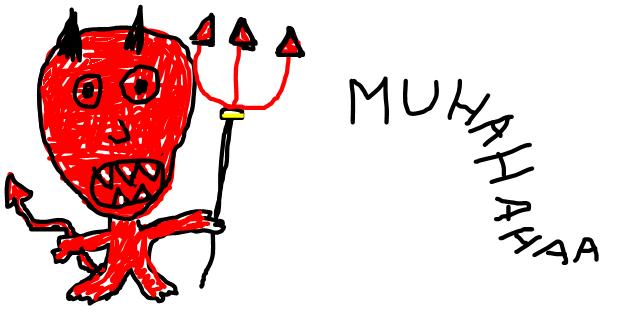
Who you calling evil?

Over lunch, I was telling a friend about my inner critic: the voice that tells me I’m not good enough, the voice that demands that I should do more and better of whatever I do.

“That’s your yetzer hara, she replied.

“Piru” by Jäinenbanaani – Tietokone. Licensed under Public Domain via Wikimedia Commons

I was startled by that context for the Hebrew phrase meaning “evil impulse”—the Jewish version of the cartoon devil on your shoulder. I considered my inner critic to be well-intentioned, if overly harsh. Sure, it calls me names sometimes—lazy, selfish, irresponsible—but isn’t that simply a misguided effort to help me be the opposite of lazy, selfish, and irresponsible? Isn’t that voice trying to help me do good things? How could it be evil?

Continue reading

Poems for my father

I haven’t written poetry since I was a child. (Birthday doggerel doesn’t count.) And I don’t often remember my dreams. But a few weeks ago, I dreamed about my father. A few days later, I found myself thinking about the dream in what seemed like a poetic form. So I wrote it.

A few days after that, a second poem emerged. Coming amid a drought of creative energy, they felt like gifts from some inner oasis.

Where Dad Lived

At first it was the same old dream:
classes unattended, assignments unbegun.
Then, leaving the school, a footloose ramble on unfamiliar streets,
through an alley, down a green terrace,
around to the front of a house I did not know.
But I knew it was where Dad lived.

Up the steps, through the front door—
and there he lay, on the living room floor. Not dead, not dying,
neither collapsed nor fallen,
yet something was wrong.
He talked about a hospital stay, and what he learned there
about his heart.

On the phone from Florida, he used to tell me about his A fib,
the pacemaker with two leads,
the new one with three.
Lying on the floor of this dream house that I did not recognize,
Dad delivered a report from the heart
about the pain that doesn’t show up on an EKG.

Mom almost didn’t marry him
because he didn’t like poetry.
“Rita!” her friend Barbara chided. “How much time
do you spend reading poetry?”
Mom elaborated:
“He didn’t talk about his feelings.”

Now, three years after she discovered him
lifeless on the bedroom floor,
maybe Dad is beginning to teach me
the poetry that was in his heart.

Sunset

At the end of the week
that was not shiva, I drove my mother
to the funeral home.
She had chosen a canister with a sunset design.
She cradled it in her lap on the way home.

I dropped her at the door
and carried my father
across the parking lot,
by the sparkling fountain,
through the lobby,
past his memorial photo that would be
gone the next day.

“Put it in the bedroom,” Mom said,
“in the corner where I found him.”
There, atop the dresser with his socks and boxers,
I set him down.

So much heavier
than I ever could have imagined.

What is the Mary Oliver Challenge? Glad you asked! You can read about it here.

Not retired, just tired (again)

When I began this blog, I deliberately set no expectations for when or whether I would post on it. A key part of this Mary Oliver Challenge that I have set for myself is learning to distinguish what I really want, at any given moment, from my own expectations or the ones that (I perceive) other people have for me. The seemingly simple question—“what do you want, Carole?”—gets so tangled up in what I think I should do that it becomes hard to tell the difference. So I have been determined not to let the blog become a “should.”

Still, I feel bad that I haven’t written here in more than a month.

Continue reading

The still, small voice

Last year and the year before, the Jewish High Holy Days brought an especially welcome respite from the stress I felt in my daily life. Now, I’m trying to make my daily life a respite—that’s my self-styled Mary Oliver Challenge. So Rosh Hashana felt different this year. It was warm and communal, as always. But instead of providing a break from busyness, the holiday itself felt busy.

It was on Wednesday morning, after the two-day holiday ended, that I recognized this most clearly.

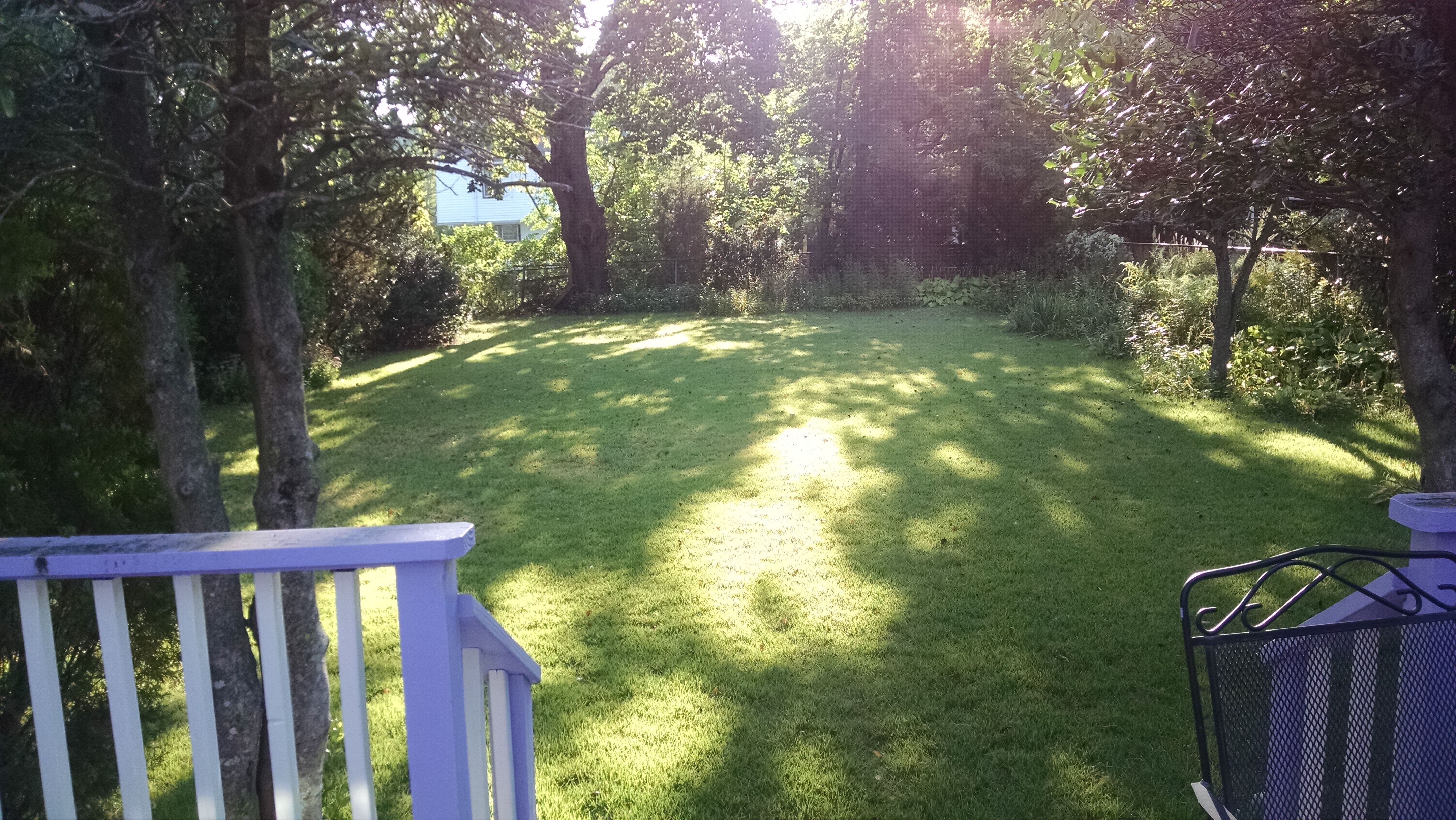
My backyard shul-away-from-shul.

The previous two mornings, I curtailed my usual stretching-and-yoga practice so that I could get to synagogue—and I paid for that choice in the form of achy muscles. On the morning after, I indulged in the full practice, and my body thanked me for it. Then I put on my tallis and tefillin for my solitary morning prayers.

It took a long time to settle in. Thoughts kept running through my head—many of them good thoughts, feelings of gratitude, useful insights. I felt the privilege of sitting on my deck, in my beautiful backyard on a glorious late-summer day, with a cup of the delicious and fortifying coffee that I’m trying to wean myself from before next week’s Yom Kippur fast. I felt the privilege of having that time to devote to my self, my psyche, my soul. And as my thoughts gradually came to rest and I settled into myself, I realized how much I had missed that reflection time during the previous two days.

Continue reading

To dwell in the house of the Lord

One thing I ask of the Lord; I will seek it: 
To dwell in the house of the Lord all the days of my life.

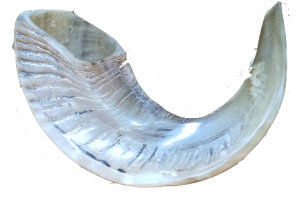
It is the season of t’shuFeatured imageva, commonly translated as repentance but really meaning “returning.” Starting on the first of Elul—the Hebrew month before Rosh Hashana, the Jewish New Year—we hear a daily wakeup blast from the shofar, and we recite Psalm 27, including the lines above. And I ask myself: what does it mean to live in God’s house? Not in some hoped-for afterlife, but here and now, all the days of my life?

Continue reading

The spirit of (57)76

It’s the end of the summer. Kids are going back to school. Teachers are going back to work.

I’m on a different calendar.

Featured image
If the goldenrod is starting to bloom, summer is surely waning.

For sure, I am preparing for the Jewish new year, 5776, which begins in less than three weeks (!). But for the first time in 20 years, neither of my daughters is beginning a new year as a student. And I, having quit my job in July, am not heading back to work.

That feels odd. I am beginning to feel stirrings of when-will-this-experiment-in-voluntary-unemployment end, and what-will-I-do-next, and when-will-I-start-making-some-money. These stirrings are unsettling and unwelcome, because they don’t come from my heart or my gut, from a feeling that I’m ready to move onto the next thing. They come from my mind, specifically the voice in my head that tells me I’m not good enough. That in everything I do, I should do more of it, and better. That I am what I do—if I’m doing not much to speak of, then that’s what I am.

Continue reading